Make a Difference with Augmented Reality Applications!
What Is Augmented Reality (AR)?
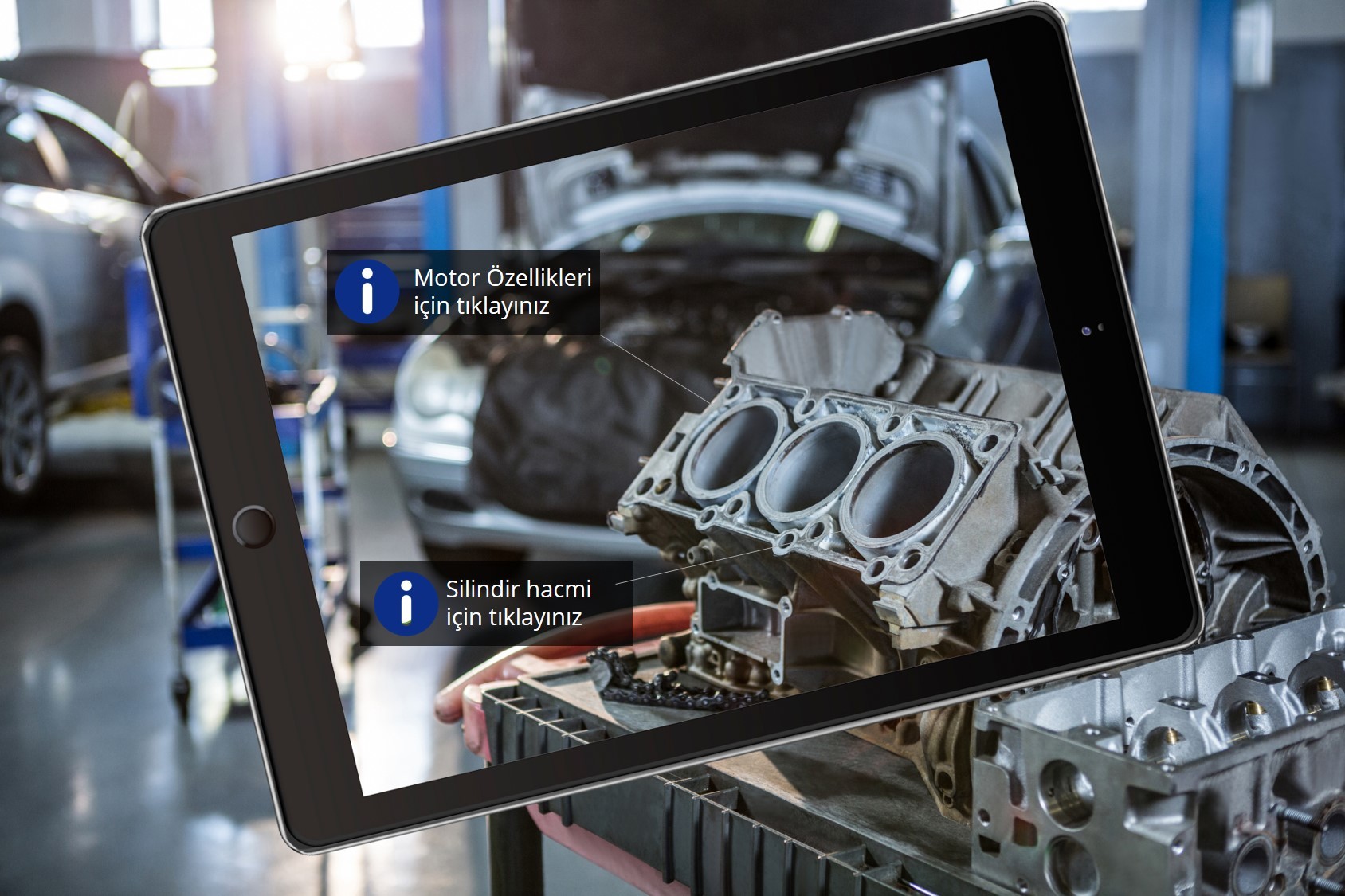
Augmented Reality applications use devices such as phones and tablets to overlay virtual images on top of live camera footage. With AR technology, your device recognizes specific images and objects, letting you get information through the app and interact with virtual elements.
At LunaFuture, our custom Augmented Reality applications recognize the images and objects you choose and deliver entirely new experiences through entertaining, informative visuals and 3D models.
Features
- AR concepts built around your needs
- Engaging 3D models and animations
- Custom poster + app for your organization
- Object recognition and information
- Native app for Android and iOS
Use Cases
- At events of all kinds, in foyers and hallways
- In product launches
- On boards displayed in classrooms during classroom training
- In on-the-job training for white- and blue-collar staff
- On all kinds of printed materials
On-the-Job Training Tool
Beyond its use in entertainment and marketing, we believe Augmented Reality has significant potential for on-the-job training. With AR applications that recognize specific devices and graphic elements, you can help your employees get to know their own work environment first-hand and access information on the spot.
- Recognizing specific machines and devices
- QR code and sticker recognition
- Location-based recognition
- 3D animated information
- Triggering video training
Case Study: Aksigorta AR Application
To bring a fresh approach to Aksigorta’s MT Training Program, we presented core onboarding information about the company through visuals displayed in the event area and classrooms.
Using our Augmented Reality app on their phones, participants scanned areas on the visuals to access animations and information about the company and the program.
- Technical Scenarios and Applications
- Onboarding Information
- Training Program Information
Frequently Asked Questions
What is the difference between AR and VR?
VR (Virtual Reality) transports the user into a fully digital environment, while AR (Augmented Reality) keeps the real world and adds digital content on top of it. This way, users gain additional information and experiences while still interacting with their surroundings.
Which devices do AR applications run on?
AR applications can run on iOS and Android phones, tablets and AR-enabled smart glasses. The most suitable platform is chosen based on the project’s needs.
Which industries can use AR?
Augmented Reality can be used in a wide range of fields: education and e-learning, industrial maintenance and technical service, product promotion and marketing, trade shows and events, retail and e-commerce, architecture and construction, healthcare, and museum and cultural heritage projects.
How is AR used in training?
With AR, users can examine machine parts, see assembly steps, learn safety procedures hands-on or receive digital guidance on physical products. This makes learning more lasting and interactive.
Can you use our existing 3D models?
Yes. If you have 3D models in CAD, BIM or other formats, we can adapt them for AR and integrate them into the project. Where needed, we also carry out optimization work.
How long does it take to develop an AR project?
It depends on the project’s scope: simple applications can be completed within a few weeks, while comprehensive enterprise solutions may take a few months. We set a clear timeline during the analysis phase.